CFDs are complex instruments and come with a high risk of losing money rapidly due to leverage. Between 51% and 89% of retail investor accounts lose money when trading CFDs. You should consider whether you understand how CFDs work and whether you can afford to take the high risk of losing your money.
Regulation
Capital.com vs Pepperstone: both are online brokers that are not publicly traded and are not banks. Capital.com was founded in 2016, while Pepperstone launched in 2010. Based on ForexBrokers.com’s Trust Score (out of 99), Capital.com scores 89, which is considered trusted, and Pepperstone scores 94, which is considered highly trusted.
When it comes to licenses, each broker holds three Tier-1 licenses (the highest level of trust). Capital.com also holds three Tier-2 licenses, compared with two for Pepperstone. In short, both brokers are well regulated worldwide; Pepperstone earns the higher overall trust score, while Capital.com lists one extra Tier-2 license.
|
Feature |
 Capital.com Capital.com
|
 Pepperstone Pepperstone
|
|
Year Founded
|
2016
|
2010
|
|
Publicly Traded (Listed)
|
No
|
No
|
|
Bank
|
No
|
No
|
|
Tier-1 Licenses
|
3
|
3
|
|
Tier-2 Licenses
|
3
|
2
|
|
Tier-3 Licenses
|
0
|
0
|
|
Tier-4 Licenses
|
2
|
2
|
Fees
Capital.com and Pepperstone both earn 5 out of 5 stars for commissions and fees, but Capital.com comes out ahead in the ForexBrokers.com rankings, placing #3 out of 36 brokers compared with Pepperstone at #6. In plain terms, both brokers can be cost-effective, but Capital.com has the edge overall on pricing. It offers a universal account for retail traders and a professional account for eligible clients, though professional clients do not get the same level of regulatory protection as retail clients.
Capital.com’s pricing is slightly better than the industry average, and one of its biggest strengths is low forex trading costs. Its EUR/USD spread averaged 0.67 pips, based on April 2024 data, which is below the industry norm and makes it a good pick for traders looking to keep costs down. Pepperstone, by contrast, has more mixed pricing: its Razor account is the stronger option, with an average EUR/USD spread of 0.10 pips in July 2024, but once the commission-equivalent cost is included, the all-in cost rises to 0.80 pips. That is still competitive, but close to the market average.
Pepperstone’s Standard account is commission-free, but its average EUR/USD spread of 1.1 pips makes it more expensive than its Razor account. Active traders may be able to reduce costs through Pepperstone’s Active Trader program, which offers rebates based on trading volume in the UK, EU, and Australia. Overall, Capital.com is the simpler low-cost choice for everyday traders, while Pepperstone is best suited to higher-volume traders who can take advantage of its Razor pricing and rebate programs.
|
Feature |
Capital.com
|
Pepperstone
|
|
Minimum Deposit
|
$20
|
$10
|
|
Average spread (EUR/USD) - Spread-only account
|
0.7
|
1.1
|
|
All-in Cost EUR/USD - Raw spread account
|
0.67
|
0.8
|
|
Non-wire bank transfer (Deposit/Withdraw)
|
No
|
Yes
|
|
PayPal (Deposit/Withdraw)
|
Yes
|
Yes
|
|
Skrill (Deposit/Withdraw)
|
Yes
|
No
|
|
Bank Wire (Deposit/Withdraw)
|
Yes
|
Yes
|
Dive deeper: Best Low Spread Forex Brokers.
Range of investments
Capital.com offers a wider range of investments than Pepperstone, making it the stronger choice for traders who want more market options. Capital.com lists 5,585 tradeable symbols and 125 forex pairs, compared with Pepperstone’s 1,726 symbols and 65 forex pairs. Both brokers offer forex trading as CFDs or spot contracts, and both support cryptocurrency CFDs, but neither lets clients buy actual cryptocurrency, U.S. exchange-traded shares, or international exchange-traded shares directly.
One key difference is copy trading: Pepperstone offers it, while Capital.com does not. Even so, Capital.com comes out ahead overall for range of investments, with a 4.5-star rating and a #18 ranking out of 36 brokers from ForexBrokers.com, versus Pepperstone’s 4 stars and #23 ranking. For traders focused on breadth of instruments, Capital.com has the edge; for those who want copy trading, Pepperstone may be the better fit.
|
Feature |
Capital.com
|
Pepperstone
|
|
Forex Trading (Spot or CFDs)
|
Yes
|
Yes
|
|
Tradeable Symbols (Total)
|
5585
|
1726
|
|
Forex Pairs (Total)
|
125
|
65
|
|
U.S. Stocks (Shares)
|
No
|
No
|
|
Global Stocks (Non-U.S. Shares)
|
No
|
No
|
|
Copy Trading
|
No
|
Yes
|
|
Cryptocurrency (Underlying)
|
No
|
No
|
|
Cryptocurrency (CFDs)
|
Yes
|
Yes
|
|
Disclaimers
|
Note: Crypto CFDs are not available to retail traders from any broker's U.K. entity, nor to U.K. residents (except to Professional clients).
|
Note: Crypto CFDs are not available to retail traders from any broker's U.K. entity, nor to U.K. residents (except to Professional clients).
|
Dive deeper: Best Copy Trading Platforms.
Trading platforms and tools
Capital.com and Pepperstone both give traders a wide choice of platforms and tools, including a free demo account, their own in-house platform, web and Windows desktop access, plus support for MetaTrader 4 and MetaTrader 5. Both also let you place trades directly from a chart, which can be useful if you like to react quickly to price moves. On the charting side, both brokers offer technical analysis features, though the exact number of indicators was not provided here.
The main difference is copy trading: Pepperstone offers it, while Capital.com does not. In independent ratings for trading platforms and tools, Capital.com comes out ahead with 4.5 out of 5 stars and a #10 rank out of 36 brokers, compared with Pepperstone’s 4 stars and #21 rank. For traders who want a slightly stronger all-around platform score, Capital.com has the edge, while Pepperstone may appeal more if copy trading is important to you.
|
Feature |
Capital.com
|
Pepperstone
|
|
Virtual Trading (Demo)
|
Yes
|
Yes
|
|
Proprietary Desktop Trading Platform
|
Yes
|
Yes
|
|
Desktop Platform (Windows)
|
Yes
|
Yes
|
|
Web Platform
|
Yes
|
Yes
|
|
Copy Trading
|
No
|
Yes
|
|
MetaTrader 4 (MT4)
|
Yes
|
Yes
|
|
MetaTrader 5 (MT5)
|
Yes
|
Yes
|
|
Charting - Indicators / Studies (Total)
|
97
|
15
|
|
Charting - Trade From Chart
|
Yes
|
Yes
|
Dive deeper: Best MetaTrader 4 Brokers, Best MetaTrader 5 Brokers.
Forex trading apps
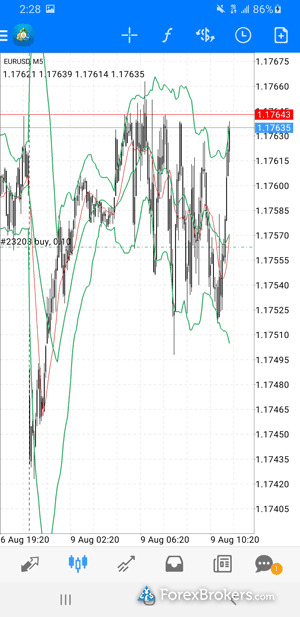
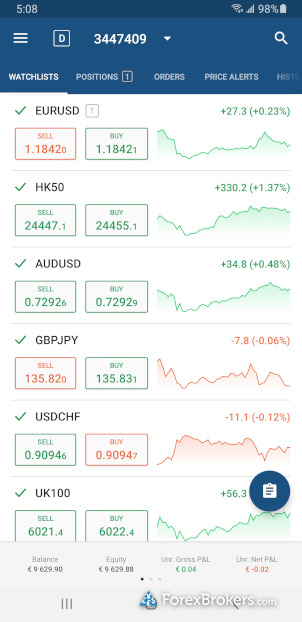
Capital.com and Pepperstone both offer mobile trading apps for iPhone and Android, so either broker lets you trade on the go from a phone or tablet. Each app also includes stock and forex price alerts, 30 technical studies for chart analysis, trendline drawing, and automatic saving of chart drawings. In these core areas, the two brokers are closely matched for everyday mobile trading needs.
The main difference is watchlist syncing. Pepperstone lets you sync watchlists between its mobile app and online account, so changes update across devices, while Capital.com does not. Capital.com also comes out ahead in overall mobile app ratings, with 4.5 stars and an #11 ranking out of 36 brokers from ForexBrokers.com, compared with Pepperstone’s 4 stars and #19 ranking.
|
Feature |
Capital.com
|
Pepperstone
|
|
Android App
|
Yes
|
Yes
|
|
Apple iOS App
|
Yes
|
Yes
|
|
Mobile Price Alerts
|
Yes
|
Yes
|
|
Mobile Watchlists - Syncing
|
No
|
Yes
|
|
Mobile Charting - Indicators / Studies
|
30
|
30
|
|
Mobile Charting - Draw Trendlines
|
Yes
|
Yes
|
|
Mobile Charting - Trendlines Autosave
|
Yes
|
Yes
|
Dive deeper: Best Forex Trading Apps.
Market research
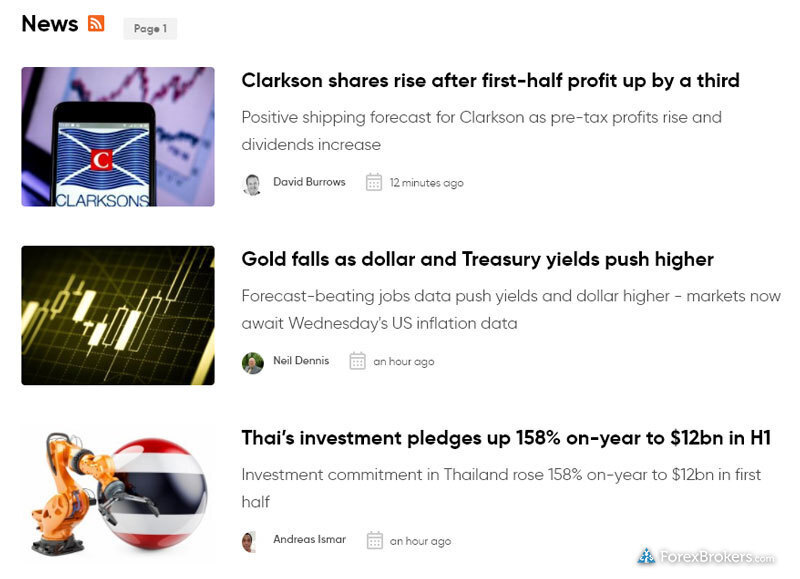
Capital.com and Pepperstone both give traders a strong set of market research tools. Each broker provides daily market commentary, forex news from top sources like Bloomberg and Reuters, a sentiment tool that shows long and short positioning, and an economic calendar for tracking key global events. Both are also rated 4.5 out of 5 stars for research, which puts them among the better choices for traders who want regular market updates and simple ways to follow price-moving news.
The main difference is that Pepperstone has an edge in research depth thanks to its Autochartist access, while Capital.com does not offer this tool. Neither broker includes Trading Central, TipRanks, or Acuity Trading. In ForexBrokers.com’s research rankings, Pepperstone places slightly higher at #13 out of 36 brokers, compared with Capital.com at #14, so Pepperstone comes out just ahead overall for market research.
|
Feature |
Capital.com
|
Pepperstone
|
|
Daily Market Commentary (Articles)
|
Yes
|
Yes
|
|
Forex News (Top-Tier Sources)
|
Yes
|
Yes
|
|
Autochartist
|
No
|
Yes
|
|
Trading Central
|
No
|
No
|
|
Client sentiment data
|
Yes
|
Yes
|
|
TipRanks
|
No
|
No
|
|
Acuity Trading
|
No
|
No
|
|
Economic Calendar
|
Yes
|
Yes
|
Dive deeper: Best Brokers for Forex Research.
Beginners and education
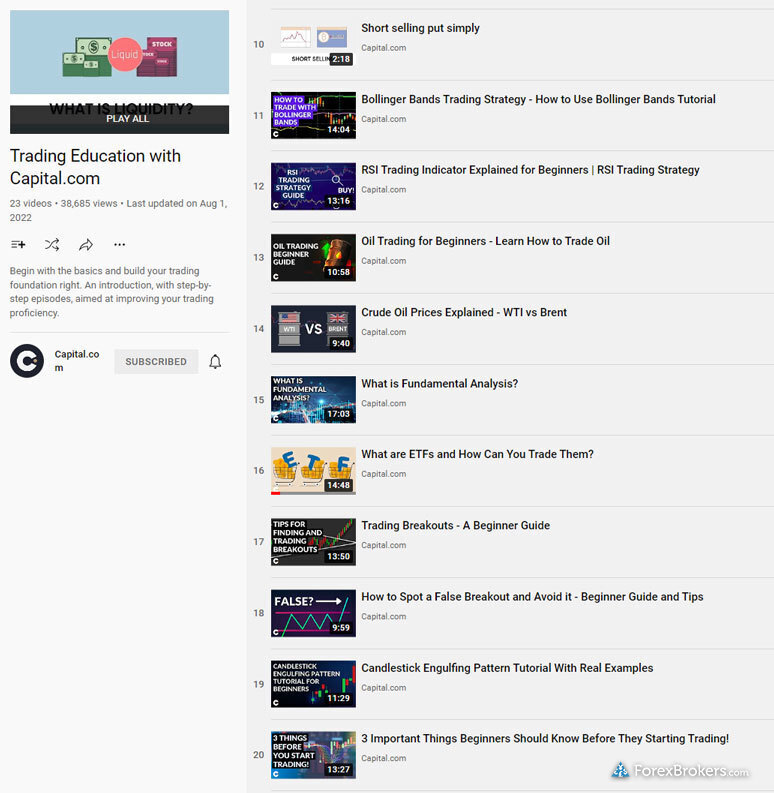
When it comes to learning tools for beginners, both Capital.com and Pepperstone give new traders plenty to work with. Each broker offers at least 10 beginner trading videos, as well as at least 10 advanced videos for more experienced users. Both are also rated 4.5 out of 5 stars for Education, showing that each one takes trader learning seriously. Capital.com goes a step further in the ForexBrokers.com ranking, placing #8 out of 36 brokers for Education, while Pepperstone sits at #15.
There are a few clear differences, though. Pepperstone offers monthly online educational webinars, which can be helpful for beginners who learn best in a live setting. Capital.com does not offer webinars at least once a month. Based on the information provided, both brokers appear to have forex or CFD education available, but Pepperstone has the edge for live learning, while Capital.com stands out slightly in the overall education ranking.
|
Feature |
Capital.com
|
Pepperstone
|
|
Webinars
|
No
|
Yes
|
|
Videos - Beginner Trading Videos
|
Yes
|
Yes
|
|
Videos - Advanced Trading Videos
|
Yes
|
Yes
|
Dive deeper: Best Forex Brokers for Beginners.
Winner
After testing 63 of the best forex brokers, our research and account testing finds that Capital.com is better than Pepperstone. Capital.com finished with an overall rank of #12, while Pepperstone finished with an overall rank of #17.
Capital.com stands out for its quality research, strong educational content, and innovative web platform. Capital.com holds fewer regulatory licenses and offers a narrower range of markets than some of the best brokers, but still significantly outperforms the industry average.
|
Feature |
Capital.com
|
Pepperstone
|
|
Overall Rating
|

|
|
|
Trust Score
|
89
|
94
|
|
Range of Investments
|
|

|
|
Trading Fees
|

|
|
|
Trading Platforms
|
|
|
|
Research
|
|
|
|
Mobile Trading
|
|
|
|
Education
|
|
|
FAQs
Can you trade cryptocurrency with Capital.com or Pepperstone?
Capital.com vs Pepperstone: neither broker supports buying actual (delivered) cryptocurrency, but both offer cryptocurrency CFD trading.
What funding options does each broker offer?
In the Capital.com vs Pepperstone comparison of deposit and withdrawal methods, Capital.com supports PayPal, Skrill, and bank wire transfers but not ACH/SEPA, while Pepperstone offers ACH/SEPA, PayPal, and bank wires but does not support Skrill.
announcementPlease note:
We review each broker’s overall global offering – a “Yes” checkmark in our Compare Tool does not guarantee the availability of any specific features in your country of residence. To verify the availability of any features within your country of residence, please contact the broker directly.
navigate_before
navigate_next
|
Overall Rating
|
Capital.com |
Pepperstone |
|
|
Overall Rating
|
|
|
|
|
Trading Fees |
|
|
|
|
Range of Investments |
|
|
|
|
Trading Platforms |
|
|
|
|
Mobile Trading |
|
|
|
|
Research |
|
|
|
|
Education |
|
|
|
|
Trust Score
|
89
|
94
|
|
|
Winner |
check_circle
|
|
|
|
Review |
Capital.com Review
|
Pepperstone Review
|
|
|
Broker Screenshots
|
Capital.com |
Pepperstone |
|
|
Broker Gallery (click to expand)
|
|
|
|
|
Regulation
|
Capital.com |
Pepperstone |
|
|
Trust Score
|
89
|
94
|
|
|
Year Founded
|
2016
|
2010
|
|
|
Publicly Traded (Listed)
|
No
|
No
|
|
|
Bank
|
No
|
No
|
|
|
Regulated in one or more EU or EEA countries (MiFID).
|
Yes
|
Yes
|
|
|
Tier-1 Licenses
|
3
|
3
|
|
|
Tier-2 Licenses
|
3
|
2
|
|
|
Tier-3 Licenses
|
0
|
0
|
|
|
Tier-4 Licenses
|
2
|
2
|
|
|
Tier-1 Licenses (Highly Trusted)
|
Capital.com |
Pepperstone |
|
|
Australia (ASIC Authorised)
|
Yes
|
Yes
|
|
|
Canada (CIRO Authorised)
|
No
|
No
|
|
|
Hong Kong (SFC Authorised)
|
No
|
No
|
|
|
Japan (FSA Authorised)
|
No
|
No
|
|
|
Singapore (MAS Authorised)
|
No
|
No
|
|
|
Switzerland (FINMA Authorised)
|
|
|
|
|
United Kingdom (U.K.) (FCA Authorised)
|
Yes
|
Yes
|
|
|
USA (CFTC Authorized)
|
No
|
No
|
|
|
New Zealand (FMA Authorised)
|
No
|
No
|
|
|
Regulated in one or more EU or EEA countries (MiFID).
|
Yes
|
Yes
|
|
|
Tier-2 Licenses (Trusted)
|
Capital.com |
Pepperstone |
|
|
Kenya (CMA Authorised)
|
Yes
|
Yes
|
|
|
Israel (ISA Authorised)
|
No
|
No
|
|
|
South Africa (FSCA Authorised)
|
No
|
No
|
|
|
UAE (DFSA, FSRA, or CMA Authorised)
|
Yes
|
Yes
|
|
|
India (SEBI Authorised)
|
No
|
No
|
|
|
Jordan (JSC Authorised)
|
|
|
|
|
Investments
|
Capital.com |
Pepperstone |
|
|
Forex Trading (Spot or CFDs)
|
Yes
|
Yes
|
|
|
Tradeable Symbols (Total)
|
5585
|
1726
|
|
|
Forex Pairs (Total)
|
125
|
65
|
|
|
U.S. Stocks (Shares)
|
No
|
No
|
|
|
Global Stocks (Non-U.S. Shares)
|
No
|
No
|
|
|
Copy Trading
|
No
|
Yes
|
|
|
Cryptocurrency (Underlying)
|
No
|
No
|
|
|
Cryptocurrency (CFDs)
|
Yes
|
Yes
|
|
|
Disclaimers |
Note: Crypto CFDs are not available to retail traders from any broker's U.K. entity, nor to U.K. residents (except to Professional clients).
|
Note: Crypto CFDs are not available to retail traders from any broker's U.K. entity, nor to U.K. residents (except to Professional clients).
|
|
|
Cost
|
Capital.com |
Pepperstone |
|
|
Average spread (EUR/USD) - Spread-only account
|
0.7
|
1.1
|
|
|
All-in Cost EUR/USD - Raw spread account
|
0.67
|
0.8
|
|
|
Inactivity Fee
|
No
|
No
|
|
|
Order execution: Agency
|
No
|
Yes
|
|
|
Order execution: Market Maker
|
Yes
|
Yes
|
|
|
Funding
|
Capital.com |
Pepperstone |
|
|
Minimum Deposit
|
$20
|
$10
|
|
|
PayPal (Deposit/Withdraw)
|
Yes
|
Yes
|
|
|
Skrill (Deposit/Withdraw)
|
Yes
|
No
|
|
|
Bank Wire (Deposit/Withdraw)
|
Yes
|
Yes
|
|
|
Non-wire bank transfer (Deposit/Withdraw)
|
No
|
Yes
|
|
|
Trading Platforms
|
Capital.com |
Pepperstone |
|
|
Proprietary Desktop Trading Platform
|
Yes
|
Yes
|
|
|
Desktop Platform (Windows)
|
Yes
|
Yes
|
|
|
Web Platform
|
Yes
|
Yes
|
|
|
Copy Trading
|
No
|
Yes
|
|
|
MetaTrader 4 (MT4)
|
Yes
|
Yes
|
|
|
MetaTrader 5 (MT5)
|
Yes
|
Yes
|
|
|
cTrader
|
No
|
Yes
|
|
|
Trading Tools
|
Capital.com |
Pepperstone |
|
|
Virtual Trading (Demo)
|
Yes
|
Yes
|
|
|
Price Alerts
|
Yes
|
Yes
|
|
|
Charting - Indicators / Studies (Total)
|
97
|
15
|
|
|
Charting - Trade From Chart
|
Yes
|
Yes
|
|
|
Charts can be saved
|
Yes
|
Yes
|
|
|
Mobile Trading
|
Capital.com |
Pepperstone |
|
|
Android App
|
Yes
|
Yes
|
|
|
Apple iOS App
|
Yes
|
Yes
|
|
|
Mobile Price Alerts
|
Yes
|
Yes
|
|
|
Mobile Watchlist [DELETED]
|
|
|
|
|
Mobile Watchlists - Syncing
|
No
|
Yes
|
|
|
Mobile Charting - Indicators / Studies
|
30
|
30
|
|
|
Mobile Charting - Draw Trendlines
|
Yes
|
Yes
|
|
|
Mobile Charting - Trendlines Autosave
|
Yes
|
Yes
|
|
|
Mobile Research - Economic Calendar
|
Yes
|
Yes
|
|
|
Research
|
Capital.com |
Pepperstone |
|
|
Daily Market Commentary (Articles)
|
Yes
|
Yes
|
|
|
Forex News (Top-Tier Sources)
|
Yes
|
Yes
|
|
|
Autochartist
|
No
|
Yes
|
|
|
Trading Central
|
No
|
No
|
|
|
TipRanks
|
No
|
No
|
|
|
Client sentiment data
|
Yes
|
Yes
|
|
|
Economic Calendar
|
Yes
|
Yes
|
|
|
Education
|
Capital.com |
Pepperstone |
|
|
Webinars
|
No
|
Yes
|
|
|
Videos - Beginner Trading Videos
|
Yes
|
Yes
|
|
|
Videos - Advanced Trading Videos
|
Yes
|
Yes
|
|
|
Major Forex Pairs
|
Capital.com |
Pepperstone |
|
|
GBP/USD [DELETED]
|
|
|
|
|
USD/JPY [DELETED]
|
|
|
|
|
EUR/USD
|
Yes
|
Yes
|
|
|
USD/CHF [DELETED]
|
|
|
|
|
USD/CAD [DELETED]
|
|
|
|
|
NZD/USD [DELETED]
|
|
|
|
|
AUD/USD [DELETED]
|
|
|
|
|
Review |
Capital.com Review
|
Pepperstone Review
|
|
|
Overall
|
Capital.com |
Pepperstone |
|
|
Overall Rating
|
|
|
|
|
Trading Fees |
|
|
|
|
Range of Investments |
|
|
|
|
Trading Platforms |
|
|
|
|
Mobile Trading |
|
|
|
|
Research |
|
|
|
|
Education |
|
|
|
|
Trust Score
|
89
|
94
|
|
|
Winner |
check_circle
|
|
|
|
Review |
Capital.com Review
|
Pepperstone Review
|
|
arrow_upward
 IG
IG FOREX.com
 CMC Markets
 XTB
XTB eToro
eToro Capital.com
 AvaTrade
 Pepperstone
 FP Markets
 Tickmill