CFDs are complex instruments and come with a high risk of losing money rapidly due to leverage. Between 51% and 89% of retail investor accounts lose money when trading CFDs. You should consider whether you understand how CFDs work and whether you can afford to take the high risk of losing your money.
Regulation
Capital.com (founded 2016) and OANDA (founded 1996) are both privately held and not banks. According to ForexBrokers.com, Capital.com holds a Trust Score of 89 (trusted), while OANDA scores 92 (highly trusted). In terms of regulation, Capital.com holds 3 Tier-1 licenses (highly trusted) and 3 Tier-2 licenses (trusted). OANDA holds 7 Tier-1 licenses and 0 Tier-2 licenses.
OANDA’s seven Tier-1 licenses indicate broader top-tier oversight and align with its higher Trust Score. Capital.com combines 3 Tier-1 with 3 Tier-2 licenses for a well-regulated footprint across more jurisdictions. On the ForexBrokers.com scale, 90–99 is highly trusted and 80–89 is trusted, helping you gauge each broker’s regulatory strength at a glance.
|
Feature |
 Capital.com Capital.com
|
 OANDA OANDA
|
|
Year Founded
|
2016
|
1996
|
|
Publicly Traded (Listed)
|
No
|
No
|
|
Bank
|
No
|
No
|
|
Tier-1 Licenses
|
3
|
7
|
|
Tier-2 Licenses
|
3
|
0
|
|
Tier-3 Licenses
|
0
|
0
|
|
Tier-4 Licenses
|
2
|
1
|
Fees
In ForexBrokers.com’s commissions and fees category, Capital.com ranks #2 out of 36 brokers and earns a 5-star rating. Its pricing is slightly better than the industry average, and its main appeal is low trading costs: Capital.com reported an average EUR/USD spread of about 0.67 pips in April 2024, which is a low-cost option for forex traders. The broker offers a universal retail account and a professional account for qualifying traders, though professional clients do not receive the same level of regulatory protection.
OANDA ranks #32 out of 36 brokers and holds a 4-star rating for commissions and fees. Its forex costs are generally higher than those of the best brokers, with an average non-core EUR/USD spread of 1.61 pips in July 2024. OANDA does offer a core pricing plan with lower spreads, but it also adds a commission of $5 per side per $100,000 traded and requires a $10,000 minimum deposit, which can make the overall cost only modestly better than the standard account in some cases.
Overall, Capital.com is the cheaper choice for most traders looking at spreads and total trading costs, while OANDA is better known for features like very small trade sizes, automated execution, and rebate options for active traders. If your main focus is keeping commissions and fees low, Capital.com has the edge.
|
Feature |
Capital.com
|
OANDA
|
|
Minimum Deposit
|
$20
|
$0
|
|
Average spread (EUR/USD) - Spread-only account
|
0.7
|
1.68
|
|
All-in Cost EUR/USD - Raw spread account
|
N/A
|
1.69
|
|
Non-wire bank transfer (Deposit/Withdraw)
|
Yes
|
Yes
|
|
PayPal (Deposit/Withdraw)
|
Yes
|
Yes
|
|
Skrill (Deposit/Withdraw)
|
Yes
|
Yes
|
|
Bank Wire (Deposit/Withdraw)
|
Yes
|
Yes
|
Dive deeper: Best Low Spread Forex Brokers.
Range of investments
Capital.com and OANDA both support forex trading as CFDs or spot contracts, and each earns 4.5 out of 5 stars for range of investments. Still, Capital.com offers a wider selection of tradable markets overall, with 5,585 symbols and 125 forex pairs, compared with OANDA’s 4,172 symbols and 69 forex pairs. In ForexBrokers.com’s range of investments ranking, Capital.com also places slightly higher at #18 out of 36 brokers, while OANDA ranks #20.
The main difference comes down to product variety beyond forex. OANDA lets clients buy real stocks on U.S. and international exchanges, buy actual cryptocurrency, and use copy trading, while Capital.com does not offer these features. On the other hand, both brokers offer cryptocurrency CFDs, making them suitable for traders who want to speculate on crypto price moves rather than own the coins directly. For investors who want a broader mix of tradable instruments, Capital.com has the edge in market count, but OANDA provides more ways to invest in real assets.
|
Feature |
Capital.com
|
OANDA
|
|
Forex Trading (Spot or CFDs)
|
Yes
|
Yes
|
|
Tradeable Symbols (Total)
|
5585
|
4172
|
|
Forex Pairs (Total)
|
125
|
69
|
|
U.S. Stocks (Shares)
|
No
|
Yes
|
|
Global Stocks (Non-U.S. Shares)
|
No
|
Yes
|
|
Copy Trading
|
No
|
Yes
|
|
Cryptocurrency (Underlying)
|
No
|
Yes
|
|
Cryptocurrency (CFDs)
|
Yes
|
Yes
|
|
Disclaimers
|
Note: Crypto CFDs are not available to retail traders from any broker's U.K. entity, nor to U.K. residents (except to Professional clients).
|
Note: Crypto CFDs are not available to retail traders from any broker's U.K. entity, nor to U.K. residents (except to Professional clients).
|
Dive deeper: Best Copy Trading Platforms.
Trading platforms and tools
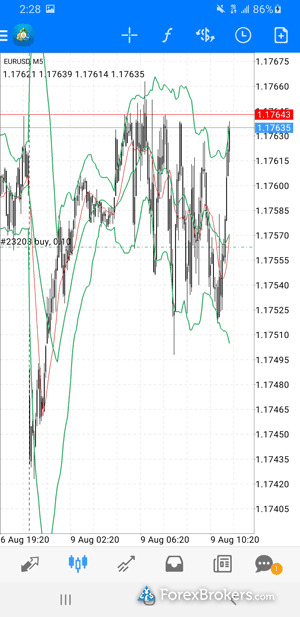
Capital.com and OANDA both give traders a strong set of platform choices, including free demo accounts, their own in-house platforms, web trading, Windows desktop downloads, and support for both MetaTrader 4 and MetaTrader 5. Each also lets users place trades directly from a chart, which can make it easier to act on market moves quickly. For charting and watchlists, both brokers provide the core tools traders expect, although the exact number of indicators and fields was not specified here.
The main difference is copy trading: OANDA offers it, while Capital.com does not. In ForexBrokers.com’s Trading Platforms and Tools category, Capital.com has the edge with a 4.5-star rating and a #10 ranking out of 36 brokers, compared with OANDA’s 4-star rating and #16 ranking. That makes Capital.com the slightly stronger pick overall for platform quality, while OANDA may appeal more to traders who want copy trading as part of their setup.
|
Feature |
Capital.com
|
OANDA
|
|
Virtual Trading (Demo)
|
Yes
|
Yes
|
|
Proprietary Desktop Trading Platform
|
Yes
|
Yes
|
|
Desktop Platform (Windows)
|
Yes
|
Yes
|
|
Web Platform
|
Yes
|
Yes
|
|
Copy Trading
|
No
|
Yes
|
|
MetaTrader 4 (MT4)
|
Yes
|
Yes
|
|
MetaTrader 5 (MT5)
|
Yes
|
Yes
|
|
Charting - Indicators / Studies (Total)
|
97
|
89
|
|
Charting - Trade From Chart
|
Yes
|
Yes
|
Dive deeper: Best MetaTrader 4 Brokers, Best MetaTrader 5 Brokers.
Forex trading apps
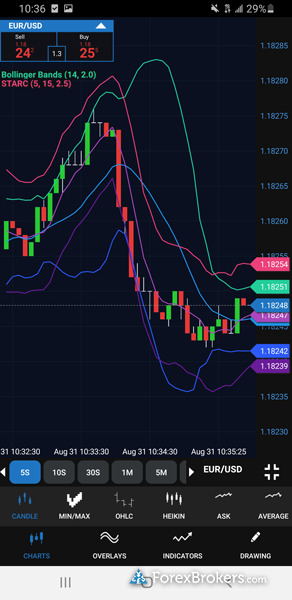
Capital.com and OANDA both offer mobile trading apps for iPhone and Android, along with price alerts, trendline drawing, and auto-saving chart drawings. Each app also includes 30 technical studies for chart analysis, which gives traders a similar set of tools for working on the go. One shared limitation is that watchlists do not sync between the mobile app and the online account on either platform.
Where they differ is in overall app quality and rankings. Capital.com is rated 4.5 out of 5 stars for mobile trading apps and is ranked #11 out of 36 brokers by ForexBrokers.com, while OANDA earns a full 5 stars and ranks #7. For traders who want the stronger mobile app experience, OANDA has the edge, though Capital.com still offers a well-rounded app with the same core features.
|
Feature |
Capital.com
|
OANDA
|
|
Android App
|
Yes
|
Yes
|
|
Apple iOS App
|
Yes
|
Yes
|
|
Mobile Price Alerts
|
Yes
|
Yes
|
|
Mobile Watchlists - Syncing
|
No
|
No
|
|
Mobile Charting - Indicators / Studies
|
30
|
30
|
|
Mobile Charting - Draw Trendlines
|
Yes
|
Yes
|
|
Mobile Charting - Trendlines Autosave
|
Yes
|
Yes
|
Dive deeper: Best Forex Trading Apps.
Market research
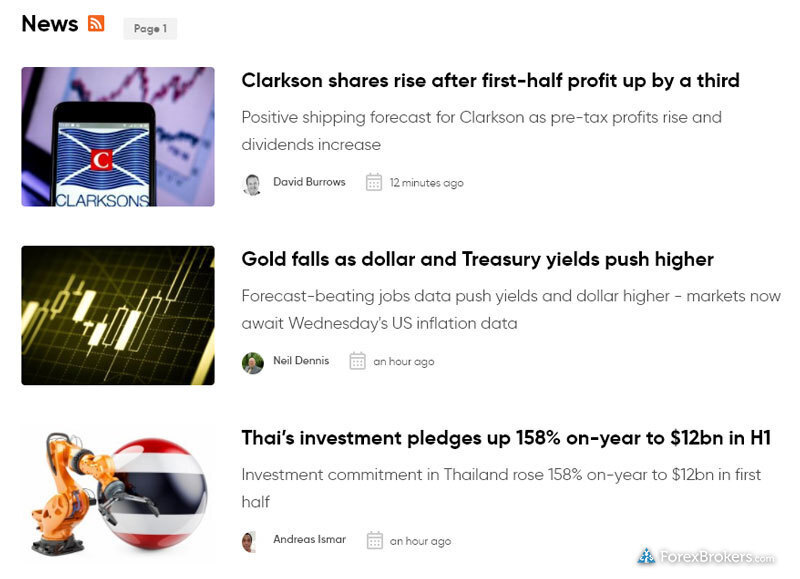
Capital.com and OANDA both give traders solid market research coverage, including daily market commentary, news from major providers such as Bloomberg, Reuters, and Dow Jones, plus an economic calendar and sentiment tools that show long and short positioning. For everyday market updates and a quick read on what may move prices, both brokers cover the basics well.
The bigger difference is in third-party research tools. OANDA includes Autochartist, which can help spot chart patterns and trading ideas, while Capital.com does not. Neither broker offers Trading Central, TipRanks, or Acuity Trading tools. Overall, OANDA has the edge for research, with a 5-star rating and a #4 ranking from ForexBrokers.com, compared with Capital.com’s 4.5 stars and #14 ranking.
|
Feature |
Capital.com
|
OANDA
|
|
Daily Market Commentary (Articles)
|
Yes
|
Yes
|
|
Forex News (Top-Tier Sources)
|
Yes
|
Yes
|
|
Autochartist
|
No
|
Yes
|
|
Trading Central
|
No
|
No
|
|
Client sentiment data
|
Yes
|
Yes
|
|
TipRanks
|
No
|
No
|
|
Acuity Trading
|
No
|
No
|
|
Economic Calendar
|
Yes
|
Yes
|
Dive deeper: Best Brokers for Forex Research.
Beginners and education
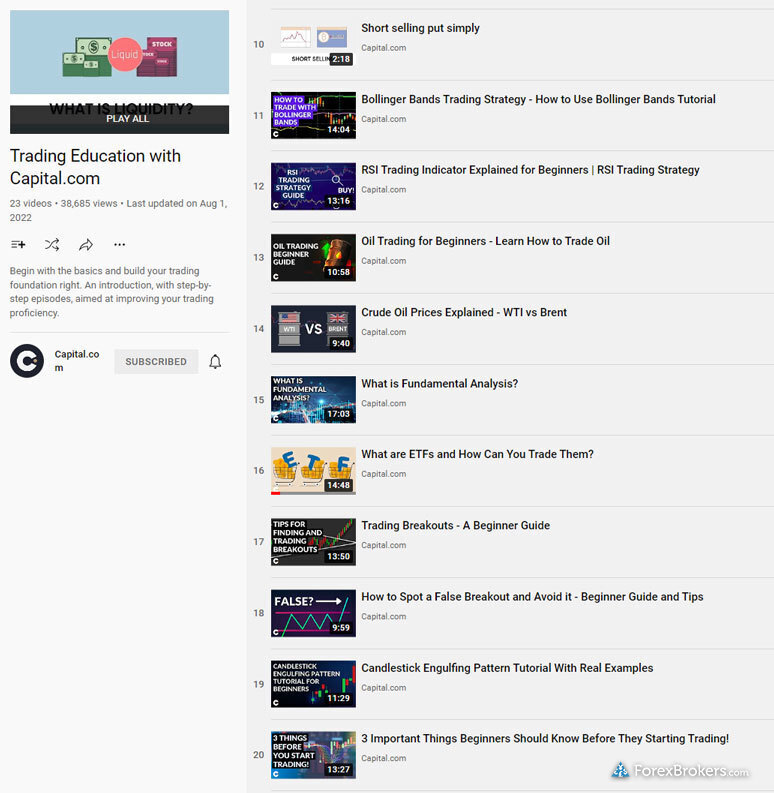
Capital.com and OANDA both give beginners plenty to learn from, including at least 10 beginner trading videos and at least 10 advanced videos for more experienced users. Both brokers also offer forex or CFDs education, with a wide range of articles, videos, and similar learning materials focused on these markets. Where they differ most is in live learning: OANDA offers online educational client webinars at least once a month, while Capital.com does not.
In third-party education ratings, OANDA earns a full 5 stars and Capital.com follows closely with 4.5 stars. Capital.com also places higher in ForexBrokers.com’s Education category, ranking #8 out of 36 brokers, compared with OANDA at #18. For beginners who want strong self-paced learning, both are solid choices, but OANDA has the edge for live webinars, while Capital.com scores better overall in the category ranking.
|
Feature |
Capital.com
|
OANDA
|
|
Webinars
|
No
|
Yes
|
|
Videos - Beginner Trading Videos
|
Yes
|
Yes
|
|
Videos - Advanced Trading Videos
|
Yes
|
Yes
|
Dive deeper: Best Forex Brokers for Beginners.
Winner
After testing 63 of the best forex brokers, our research and account testing finds that Capital.com is better than OANDA. Capital.com finished with an overall rank of #13, while OANDA finished with an overall rank of #14.
Capital.com stands out for its quality research, strong educational content, and innovative web platform. Capital.com holds fewer regulatory licenses and offers a narrower range of markets than some of the best brokers, but still significantly outperforms the industry average.
|
Feature |
Capital.com
|
OANDA
|
|
Overall Rating
|

|
|
|
Trust Score
|
89
|
92
|
|
Range of Investments
|
|
|
|
Trading Fees
|

|

|
|
Trading Platforms
|
|
|
|
Research
|
|
|
|
Mobile Trading
|
|
|
|
Education
|
|
|
FAQs
Can you trade cryptocurrency with Capital.com or OANDA?
In the Capital.com vs OANDA crypto trading comparison, OANDA lets you buy actual (delivered) cryptocurrencies and trade crypto CFDs, while Capital.com supports crypto CFDs only and does not offer delivered cryptocurrency purchases.
What funding options does each broker offer?
Capital.com and OANDA both support ACH or SEPA transfers, PayPal, Skrill, and bank wire transfers for depositing and withdrawing funds, while Visa or Mastercard availability is not specified for either broker.
announcementPlease note:
We review each broker’s overall global offering – a “Yes” checkmark in our Compare Tool does not guarantee the availability of any specific features in your country of residence. To verify the availability of any features within your country of residence, please contact the broker directly.
navigate_before
navigate_next
|
Overall Rating
|
Capital.com |
OANDA |
|
|
Overall Rating
|
|
|
|
|
Trading Fees |
|
|
|
|
Range of Investments |
|
|
|
|
Trading Platforms |
|
|
|
|
Mobile Trading |
|
|
|
|
Research |
|
|
|
|
Education |
|
|
|
|
Trust Score
|
89
|
92
|
|
|
Winner |
check_circle
|
|
|
|
Review |
Capital.com Review
|
OANDA Review
|
|
|
Broker Screenshots
|
Capital.com |
OANDA |
|
|
Broker Gallery (click to expand)
|
|
|
|
|
Regulation
|
Capital.com |
OANDA |
|
|
Trust Score
|
89
|
92
|
|
|
Year Founded
|
2016
|
1996
|
|
|
Publicly Traded (Listed)
|
No
|
No
|
|
|
Bank
|
No
|
No
|
|
|
Regulated in one or more EU or EEA countries (MiFID).
|
Yes
|
Yes
|
|
|
Tier-1 Licenses
|
3
|
7
|
|
|
Tier-2 Licenses
|
3
|
0
|
|
|
Tier-3 Licenses
|
0
|
0
|
|
|
Tier-4 Licenses
|
2
|
1
|
|
|
Tier-1 Licenses (Highly Trusted)
|
Capital.com |
OANDA |
|
|
Australia (ASIC Authorised)
|
Yes
|
Yes
|
|
|
Canada (CIRO Authorised)
|
No
|
Yes
|
|
|
Hong Kong (SFC Authorised)
|
No
|
No
|
|
|
Japan (FSA Authorised)
|
No
|
Yes
|
|
|
Singapore (MAS Authorised)
|
No
|
Yes
|
|
|
Switzerland (FINMA Authorised)
|
|
|
|
|
United Kingdom (U.K.) (FCA Authorised)
|
Yes
|
Yes
|
|
|
USA (CFTC Authorized)
|
No
|
Yes
|
|
|
New Zealand (FMA Authorised)
|
No
|
No
|
|
|
Regulated in one or more EU or EEA countries (MiFID).
|
Yes
|
Yes
|
|
|
Tier-2 Licenses (Trusted)
|
Capital.com |
OANDA |
|
|
Kenya (CMA Authorised)
|
Yes
|
|
|
|
Israel (ISA Authorised)
|
No
|
No
|
|
|
South Africa (FSCA Authorised)
|
Yes
|
No
|
|
|
UAE (DFSA, FSRA, or CMA Authorised)
|
Yes
|
No
|
|
|
India (SEBI Authorised)
|
No
|
No
|
|
|
Jordan (JSC Authorised)
|
|
|
|
|
Investments
|
Capital.com |
OANDA |
|
|
Forex Trading (Spot or CFDs)
|
Yes
|
Yes
|
|
|
Tradeable Symbols (Total)
|
5585
|
4172
|
|
|
Forex Pairs (Total)
|
125
|
69
|
|
|
U.S. Stocks (Shares)
|
No
|
Yes
|
|
|
Global Stocks (Non-U.S. Shares)
|
No
|
Yes
|
|
|
Copy Trading
|
No
|
Yes
|
|
|
Cryptocurrency (Underlying)
|
No
|
Yes
|
|
|
Cryptocurrency (CFDs)
|
Yes
|
Yes
|
|
|
Disclaimers |
Note: Crypto CFDs are not available to retail traders from any broker's U.K. entity, nor to U.K. residents (except to Professional clients).
|
Note: Crypto CFDs are not available to retail traders from any broker's U.K. entity, nor to U.K. residents (except to Professional clients).
|
|
|
Cost
|
Capital.com |
OANDA |
|
|
Average spread (EUR/USD) - Spread-only account
|
0.7
|
1.68
|
|
|
All-in Cost EUR/USD - Raw spread account
|
N/A
|
1.69
|
|
|
Inactivity Fee
|
No
|
Yes
|
|
|
Order execution: Agency
|
No
|
No
|
|
|
Order execution: Market Maker
|
Yes
|
Yes
|
|
|
Funding
|
Capital.com |
OANDA |
|
|
Minimum Deposit
|
$20
|
$0
|
|
|
PayPal (Deposit/Withdraw)
|
Yes
|
Yes
|
|
|
Skrill (Deposit/Withdraw)
|
Yes
|
Yes
|
|
|
Bank Wire (Deposit/Withdraw)
|
Yes
|
Yes
|
|
|
Non-wire bank transfer (Deposit/Withdraw)
|
Yes
|
Yes
|
|
|
Trading Platforms
|
Capital.com |
OANDA |
|
|
Proprietary Desktop Trading Platform
|
Yes
|
Yes
|
|
|
Desktop Platform (Windows)
|
Yes
|
Yes
|
|
|
Web Platform
|
Yes
|
Yes
|
|
|
Copy Trading
|
No
|
Yes
|
|
|
MetaTrader 4 (MT4)
|
Yes
|
Yes
|
|
|
MetaTrader 5 (MT5)
|
Yes
|
Yes
|
|
|
cTrader
|
No
|
No
|
|
|
Trading Tools
|
Capital.com |
OANDA |
|
|
Virtual Trading (Demo)
|
Yes
|
Yes
|
|
|
Price Alerts
|
Yes
|
Yes
|
|
|
Charting - Indicators / Studies (Total)
|
97
|
89
|
|
|
Charting - Trade From Chart
|
Yes
|
Yes
|
|
|
Charts can be saved
|
Yes
|
Yes
|
|
|
Mobile Trading
|
Capital.com |
OANDA |
|
|
Android App
|
Yes
|
Yes
|
|
|
Apple iOS App
|
Yes
|
Yes
|
|
|
Mobile Price Alerts
|
Yes
|
Yes
|
|
|
Mobile Watchlists - Syncing
|
No
|
No
|
|
|
Mobile Charting - Indicators / Studies
|
30
|
30
|
|
|
Mobile Charting - Draw Trendlines
|
Yes
|
Yes
|
|
|
Mobile Charting - Trendlines Autosave
|
Yes
|
Yes
|
|
|
Mobile Research - Economic Calendar
|
Yes
|
Yes
|
|
|
Research
|
Capital.com |
OANDA |
|
|
Daily Market Commentary (Articles)
|
Yes
|
Yes
|
|
|
Forex News (Top-Tier Sources)
|
Yes
|
Yes
|
|
|
Autochartist
|
No
|
Yes
|
|
|
Trading Central
|
No
|
No
|
|
|
TipRanks
|
No
|
No
|
|
|
Client sentiment data
|
Yes
|
Yes
|
|
|
Economic Calendar
|
Yes
|
Yes
|
|
|
Education
|
Capital.com |
OANDA |
|
|
Webinars
|
No
|
Yes
|
|
|
Videos - Beginner Trading Videos
|
Yes
|
Yes
|
|
|
Videos - Advanced Trading Videos
|
Yes
|
Yes
|
|
|
Overall
|
Capital.com |
OANDA |
|
|
Overall Rating
|
|
|
|
|
Trading Fees |
|
|
|
|
Range of Investments |
|
|
|
|
Trading Platforms |
|
|
|
|
Mobile Trading |
|
|
|
|
Research |
|
|
|
|
Education |
|
|
|
|
Trust Score
|
89
|
92
|
|
|
Winner |
check_circle
|
|
|
|
Review |
Capital.com Review
|
OANDA Review
|
|
arrow_upward
 IG
IG FOREX.com
 CMC Markets
 XTB
XTB eToro
eToro Capital.com
 AvaTrade
 XM
XM Pepperstone
 FP Markets
 Tickmill
 HFM Markets